

01
Fragmented tooling and ownership
Security scans, defect queues, repos, pipelines, and dashboards sit in different places, so teams cannot agree on what matters most.
Enterprise AppSec
Cover the full AppSec lifecycle with one operating model. Merito anchors enterprise programs across five sub-pillars and ten vendor partnerships, from shift-left code through software supply chain, runtime, developer enablement, and enterprise security platforms.
Coverage across all five AppSec sub-pillars, not a single-vendor reseller pitch
Deepest investment in software supply chain, SBOM, and developer enablement where most programs are weakest
Operating model and ASPM correlation that turns ten vendor consoles into one defensible program
Portfolio snapshot
Shift-left code, software supply chain and SBOM, runtime protection, developer enablement and governance, and enterprise security platforms. Merito picks the right platform per sub-pillar, integrates the stack into delivery, and runs the program your security and engineering leaders can actually defend.
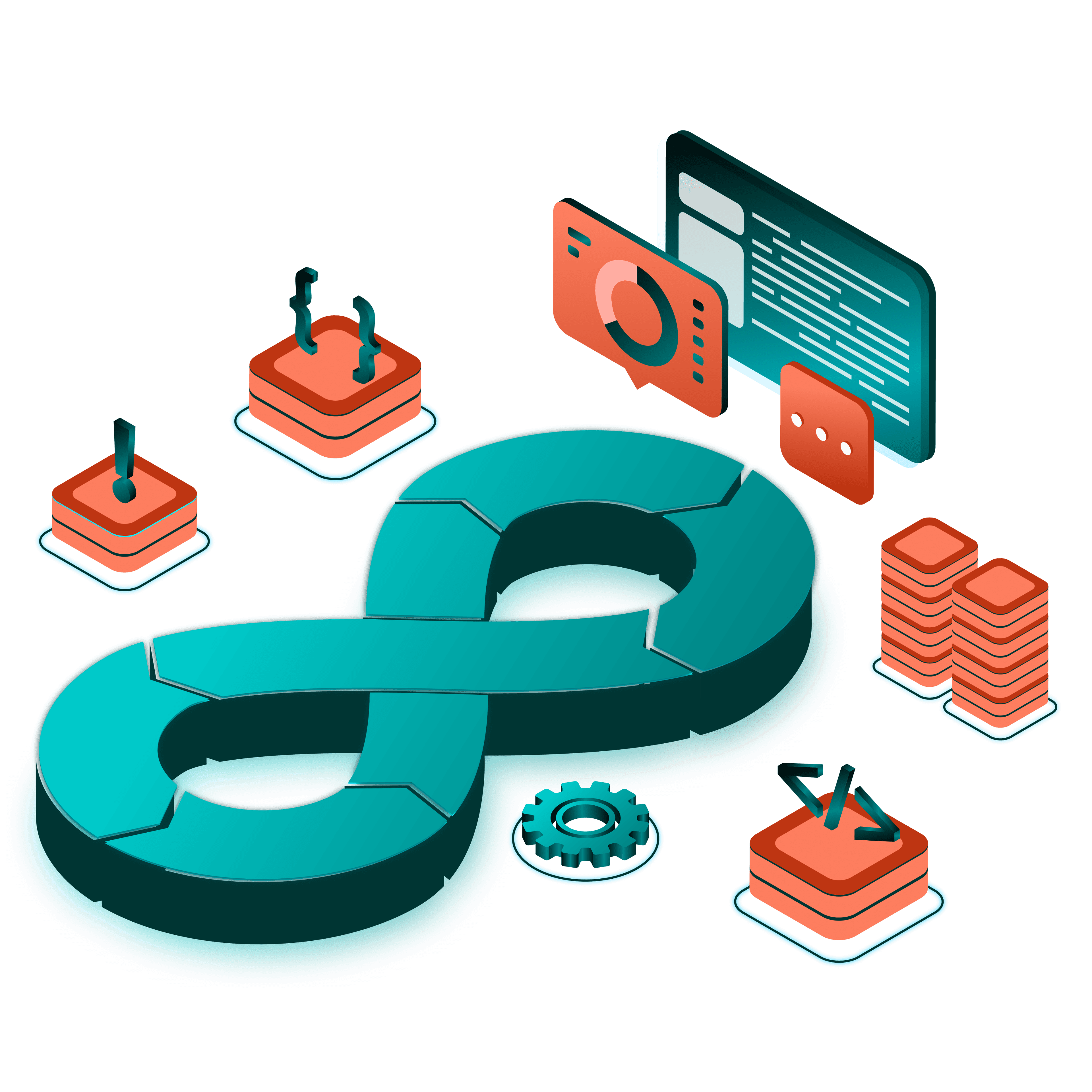
Checkmarx, Snyk, Semgrep, Black Duck Coverity, SCANOSS, and Saltworks. SAST that fits your language coverage, IDE workflow, and ASPM consolidation goals.
Sonatype, Black Duck, Snyk, SCANOSS, Checkmarx, and Semgrep. The deepest part of our practice and the part most enterprise programs underinvest in.
Akamai App and API Protector, Prolexic, API Security, and Client-side Protection. Edge controls integrated into the AppSec program, not orphaned at the perimeter.
Secure Code Warrior AI Software Governance Platform, Trust Agent, and Learning. Measurable secure-coding fluency, not training tickets nobody opens.
OpenText Security AST, Data Security, Security Operations, IAM, and DFIR. Single-vendor breadth when the Cybersecurity suite is already part of the environment.
Challenges
Application security programs stall when they are layered on top of delivery instead of designed into it. Most leaders do not need another tool. They need a working operating model that connects tools, people, policy, and release decisions.
Security scans, defect queues, repos, pipelines, and dashboards sit in different places, so teams cannot agree on what matters most.
Findings arrive too close to release windows, forcing leadership to choose between schedule pressure and unmanaged risk.
Teams drown in duplicate findings, weak severity context, and poor ownership mapping that slows remediation and erodes trust.
Different pipelines and teams apply different standards, creating governance gaps, exception sprawl, and audit pain.
Leaders can see scan counts, but not whether exposure is shrinking, delivery is safer, or release risk is actually improving.
Teams are scrambling to keep up with the pace of change, so security becomes a bottleneck instead of a partner in delivery.
Solution overview
Application security is no longer a tooling problem. It is a coverage problem. Most enterprise programs cover one or two of the five things that actually matter (shift-left code, software supply chain and SBOM, runtime protection, developer enablement and governance, and enterprise security platforms) and call it a strategy. Merito covers all five.
Merito leads where the work compounds. Software supply chain and SBOM is our deepest investment because regulated buyers are most exposed there and most programs are weakest there. Developer enablement and governance is our other anchor because tooling does not change behavior on its own. We are credible across shift-left and runtime, with Akamai depth on edge protection. OpenText Security sits in the portfolio for enterprises running the Cybersecurity suite who want single-vendor breadth across AST, Data Security, Security Operations, IAM, and DFIR alongside our other named partners.
What we will not chase. Low-end SMB AppSec SaaS that cannot survive enterprise governance. Single-language scanners that break the moment your codebase is heterogeneous. Runtime EDR adjacencies that belong with the SOC, not the AppSec program. We hold the line on scope so the parts we do run actually work.
Problem to solution
Merito is most valuable when leaders need to move from scattered security activity to a disciplined operating model that covers all five sub-pillars and produces better decisions, better developer adoption, and better release outcomes.
Problem and impact
Buyers see strong shift-left coverage but no software supply chain story, or runtime protection but no developer enablement, leaving entire categories of risk unmanaged while the program looks complete on paper.
Merito response
We map coverage across all five sub-pillars (shift-left code, software supply chain and SBOM, runtime, developer enablement, and enterprise security platforms) and name the gaps before they become incidents, then sequence the work to close them.
Problem and impact
Teams either hold releases with incomplete context or push forward under pressure, both of which damage trust in the security function.
Merito response
We move validation and enforcement earlier into CI/CD, define practical quality gates, and create an exception model that preserves speed without losing accountability.
Problem and impact
Critical exposure competes with duplicates, false positives, and context-free alerts, so remediation time increases while risk posture stays unclear.
Merito response
We implement correlation, prioritization, triage design, and workflow ownership so teams focus on exploitable risk and leadership can see whether the backlog is getting healthier.
Problem and impact
The SAST is acceptable, the SCA is mediocre, the runtime story does not exist, and the developer enablement is a slide deck. Buyers either accept the gaps or run multiple programs in parallel.
Merito response
Merito runs a vendor network of ten AppSec partnerships and picks the platform that fits each sub-pillar, integrating them into one operating model rather than forcing a single bundle on the portfolio.
Where Merito plays
Merito anchors enterprise application security around five sub-pillars and ten vendor partnerships. The cards below are the map. The vendor section that follows shows the cross-link graph for every hub and flagship product page.
SAST that fits your language coverage, IDE workflow, and ASPM consolidation goals. Anchored on Checkmarx SAST, Snyk Code, Semgrep Code, Black Duck Coverity, SCANOSS Snippet Detection, and Saltworks SaltMiner depending on stack and program maturity.
Our deepest investment. Sonatype Lifecycle, SBOM Manager, and Nexus Repository for OSS governance and binary control. Black Duck SCA, Snyk Open Source, SCANOSS SCA, Checkmarx Software Supply Chain Security, and Semgrep Supply Chain for dependency, license, and malicious-package risk. We pick the platform that fits your dependency footprint, regulatory exposure, and OSS maturity.
Akamai is our runtime story. App and API Protector for the WAAP layer, Prolexic for DDoS, API Security for the API attack surface, and Client-side Protection for browser-side threats. Edge controls integrated into the AppSec program, not orphaned at the perimeter.
Tools do not change behavior on their own. Secure Code Warrior anchors our developer work with the AI Software Governance Platform, Trust Agent for skills verification, and structured Learning paths. The result is measurable secure-coding fluency, not training tickets nobody opens.
OpenText Security is the option for enterprises running the full Cybersecurity suite. Coverage spans AST (Fortify-lineage Static, Dynamic, Application Security Aviator, and Core Application Security), Data Security, Security Operations, Identity and Access Management, and DFIR with cross-portfolio integration the suite is designed for. We support it alongside the other named partners in the portfolio rather than ahead of them.
Operating model
Step 1
Review tools, teams, pipelines, policies, and reporting to identify where the current program creates risk, friction, or blind spots.
Step 2
Inventory critical applications, release paths, ownership, regulatory commitments, and existing security controls to build the right prioritization model.
Step 3
Translate findings into the target control model, platform approach, ownership structure, and policy design needed to support secure delivery.
Step 4
Turn the target-state design into a phased roadmap leaders can sponsor, fund, and communicate across security, engineering, and release stakeholders.
Step 5
Connect scanners, repositories, ticketing, dashboards, and CI/CD controls so enforcement and visibility are consistent across the environment.
Step 6
Establish who responds, how risk is prioritized, where gates apply, and how exceptions are approved and reviewed.
Step 7
Support engineering, security, and leadership with role-based dashboards, training, and communication so the program gains sponsorship and adoption.
Step 8
Track metrics, improve coverage, tune policies, and refine workflows as teams scale and threats, platforms, and delivery patterns change.
Step 9
Transfer the operating model, documentation, dashboards, and ownership model to your internal teams so your team can run the program independently, with optional Merito support only where it still adds value.
Consultation
Talk with Merito about assessing your current state, building the roadmap, integrating the right platforms, and operationalizing AppSec across complex delivery systems.
Platform ecosystem
Ten AppSec vendor hubs and the flagship products that anchor each one. The categories below map every partnership in the Merito portfolio to the sub-pillar it serves, with direct links to vendor hubs and flagship product pages.
Selected partner and platform coverage


Explore related offerings
Program roadmap
Leaders often need more than implementation help. They need a clear path from assessment to sponsorship to scaled execution. Merito structures the work so each phase produces something leadership can fund, review, and operationalize.
Document the existing AppSec operating model, delivery constraints, coverage gaps, and organizational friction points.
Deliverable
Current-state assessment with maturity observations and risk themes.
Review configurations, findings, pipeline behavior, exception handling, and reporting quality across representative applications.
Deliverable
Audit findings with prioritized issues, control gaps, and ownership recommendations.
Sequence platform, workflow, governance, and reporting changes into a plan leadership can sponsor across teams and quarters.
Deliverable
Implementation roadmap with phases, dependencies, and measurable outcomes.
Launch with selected applications and pipelines to validate policies, triage design, and team workflows before broader rollout.
Deliverable
Pilot results, tuned controls, and rollout decision points.
Roll out the operating model, dashboards, workflows, and training so security becomes repeatable instead of personality-driven.
Deliverable
Operational playbook, governance cadence, and role-based reporting model.
Tune policies, expand coverage, improve adoption, and align metrics to the decisions leaders actually need to make.
Deliverable
Continuous-improvement backlog tied to SLA, coverage, and release-risk metrics.
Services alignment
Create a decision-ready view of current-state risk, tool fit, operating-model gaps, and the sequence of changes required to improve program maturity.
Deploy, configure, and integrate application security platforms into repositories, pipelines, ticketing systems, and reporting layers.
Reduce overlap, retire ineffective tools, and preserve critical workflows while moving toward a cleaner enterprise AppSec architecture.
Support developers, AppSec teams, and program sponsors with secure coding enablement, workflow onboarding, and change management.
Provide ongoing tuning, program reporting, policy refinement, and operational support so the program stays healthy after go-live.
Outcomes
Reduce delay between code completion, security validation, and release decision by aligning reviews to delivery workflows.
Improve prioritization, ownership clarity, and remediation flow for the issues that materially affect exposure.
Correlate findings and streamline routing so teams spend less time reconciling scanner output by hand.
Apply more consistent security controls across business units, repositories, and release paths without building one-off exceptions into every team.
Surface risk, exceptions, and remediation status earlier so release readiness becomes easier to interpret and defend.
Give leaders one view of coverage, backlog, exposure, and exception trends across the program.
Why Merito
Most competitors anchor on one or two AppSec sub-pillars. Merito covers shift-left code, software supply chain and SBOM, runtime, developer enablement, and enterprise security platforms with a vendor network ten partnerships deep.
We treat supply chain as the lead, not the afterthought. Sonatype, Black Duck SCA, Snyk Open Source, SCANOSS, Checkmarx Supply Chain, and Semgrep Supply Chain are all in active practice, picked per environment rather than bundled.
Secure Code Warrior anchors a real enablement program with skills verification, governance, and learning paths. Tooling without behavior change is a budget drain. We do the behavior change.
Merito does not sample partnerships. Sonatype, Black Duck, Snyk, SCANOSS, Checkmarx, Semgrep, Saltworks, Akamai, Secure Code Warrior, and OpenText Security all have active engagements behind them. We go to the same depth on every one, whether the customer has standardized on a single suite or runs a multi-vendor stack.
Merito runs the program after the platforms are picked. ASPM correlation, ownership clarity, exception governance, and leadership reporting are the work. The vendor network is the means.
Executive visibility
Executives do not need more scanner dashboards. They need clarity about whether coverage is expanding, whether risk is getting prioritized correctly, whether remediation is moving, and whether releases are going out with informed decisions.
Merito helps build reporting that connects AppSec activity to delivery health. That includes coverage by application and pipeline, remediation SLA performance, exception trends, and the release-readiness indicators leaders need to sponsor secure delivery at scale.
Leadership dashboard preview
Track which business units, applications, and pipelines are actually operating inside the intended security model.
Measure time to acknowledge, time to triage, time to fix, and backlog aging for high-priority exposure.
Expose where teams are bypassing controls, how long exceptions remain open, and which approvals require executive attention.
Combine AppSec status with delivery timing so launch decisions are grounded in evidence instead of optimism.
Security validation and release management
Security validation
Enterprise application security must be governable as well as technical. Merito helps organizations define policies, evidence trails, exception handling, and reporting structures that support regulated delivery and internal oversight.
That includes validation patterns aligned to release risk, role clarity between engineering and security, and audit-ready reporting that survives changes in teams, tools, and applications.
Release management
AppSec becomes valuable when it improves release decisions instead of surprising them. Merito helps teams align findings, remediation status, exception handling, and governance checkpoints to the release motion already in use.
The goal is not to create a giant security gate. It is to create a predictable path where delivery teams know what is required, leaders can see what has changed, and release readiness can be defended with evidence.
AI and automation
AI is starting to change how leaders think about triage, prioritization, policy insight, and developer support. Used well, it can help correlate noisy findings, identify patterns across large portfolios, and surface the issues most likely to affect release decisions.
Used poorly, AI simply accelerates bad assumptions and adds more noise. Leaders should treat AI as a force multiplier inside a governed AppSec program, not as a substitute for ownership, policy, evidence, or human accountability.
Applied AI use cases
Use AI-assisted analysis to sort large finding volumes, identify repeat patterns, and elevate issues that deserve leadership attention.
Improve remediation speed with context-aware explanations, secure coding prompts, and workflow-native assistance tied to approved standards.
Make large portfolios easier to govern by surfacing coverage drift, backlog aging, and risk concentration trends earlier.
Frequently Asked Questions
Consultation request
If you need help assessing, auditing, roadmapping, sponsoring, implementing, or scaling application security across your delivery ecosystem, start the conversation here.
Assessment
Clarify where the program stands and what the next phases should fund.
Implementation
Connect the right AppSec controls to CI/CD, ownership, triage, and leadership visibility.
Get Started
Your request will be reviewed by our team so we can connect you with the right solution, service, and/or expert.
Next step
Ten vendor partnerships. One operating model. Talk with Merito about which sub-pillar your program is weakest in and what a credible cross-portfolio AppSec strategy actually looks like.